
Which reverse mortgage payout option is best?
For most borrowers, the line of credit. On a reverse mortgage the payout you choose also decides the rate type, and only one branch lets you change your mind later.
Fixed rate means one lump sum at closing and nothing after it, ever. The lump sum earns its place when closing has to clear a big mortgage.
Why Does the Payout Choice Decide the Rate?
HUD recognizes six ways to take the money. A single lump sum. Tenure, monthly checks for as long as you live there. Term, the same checks for a set number of months. A line of credit you draw on when you want. And two combinations, modified tenure and modified term, which pair smaller checks with a credit line held back. That pair is what most borrowers are after.
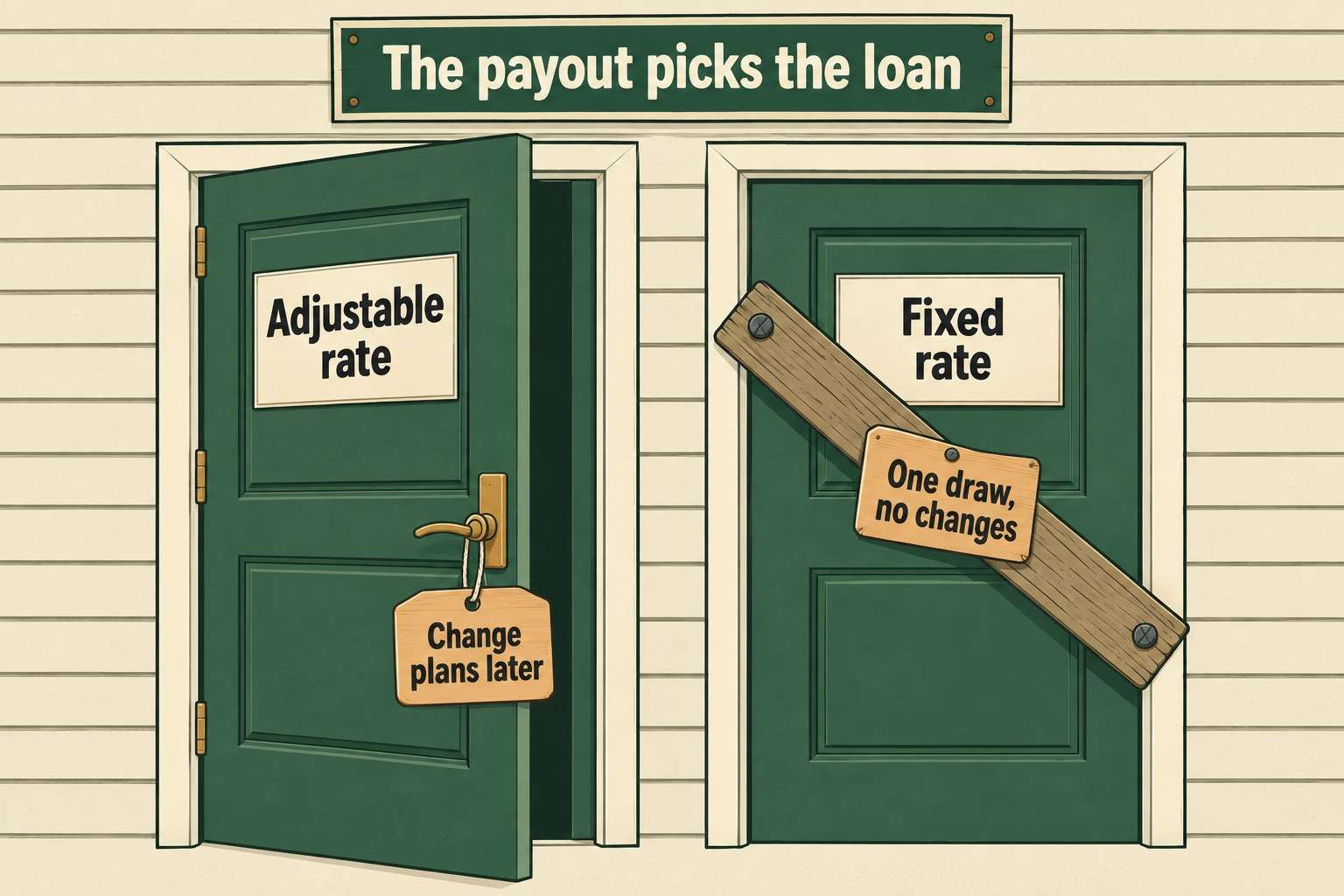
Here’s the fork nobody names. HUD’s rule is blunt. FHA insures a fixed-rate reverse mortgage only if it limits the borrower to “a single, full draw to be made at loan closing” and “does not provide for future draws by the mortgagor under any circumstances.” Every other plan on that list of six needs the adjustable rate. You aren’t choosing a payout. You’re choosing which loan you’re in.
On the adjustable side you can switch plans after year one, for a fee HUD caps at twenty dollars. On the fixed side, no switch exists. Four things go for good:
- Any future draw, whatever changes
- Any change of payout plan later
- Having the servicer pay your taxes and insurance out of the loan
- Any growth in what’s left to borrow
If income is still coming in and your credit is intact, start with our reverse mortgage alternatives page instead.
Why Is the Line of Credit Usually the Answer?
You pay for money you’ve taken, not money you could take. Interest runs on the balance you’ve drawn. The CFPB puts it plainly. With a line of credit you only pay interest on money you use. With a single disbursement you pay interest even when it sits there.
A second effect gets misread. On the adjustable side, the amount you’re allowed to borrow rises every month, at the loan’s rate plus the insurance rate. Nothing earns anything. That growth is borrowing room, never savings. But borrowing room you never paid for is worth having at eighty.
Taking all of it at closing feels like the safe move. It’s the one the federal government had to write a rule about. The CFPB’s report to Congress found borrowers who take most or all of their funds upfront are “particularly at risk” of losing the house over unpaid taxes and insurance. The servicer can’t rescue them either, with nothing left to pay from.
The lump sum still wins one case. When closing has to clear a big mortgage, the money goes out that day, so holding it back saves nothing. Tenure and term suit a steady monthly gap. The checks stop when the borrower dies though, even if a surviving spouse stays on.
What Does Massachusetts Add?
Two layers, constantly run together. Every HECM borrower completes HUD-approved counseling. That’s the federal rule. Massachusetts adds a second one where gross income is under half the area median and outside assets run under $120,000. Those applicants sign an opt-in form and get certified by a state-approved counselor. Skip it and state law says the terms are unenforceable.
One correction, since plenty of pages have this wrong. That counseling no longer has to happen in person. The statute now allows real-time video or a phone call.
One last thing. GoldCoast doesn’t arrange reverse mortgages. We’re a mortgage broker placing first-position mortgages, so we earn nothing whichever way you go. Most pages on this subject can’t say that. Before you settle on a payout, read what one leaves behind for whoever inherits the house.